Online International Book Launch – Meet Our Panel
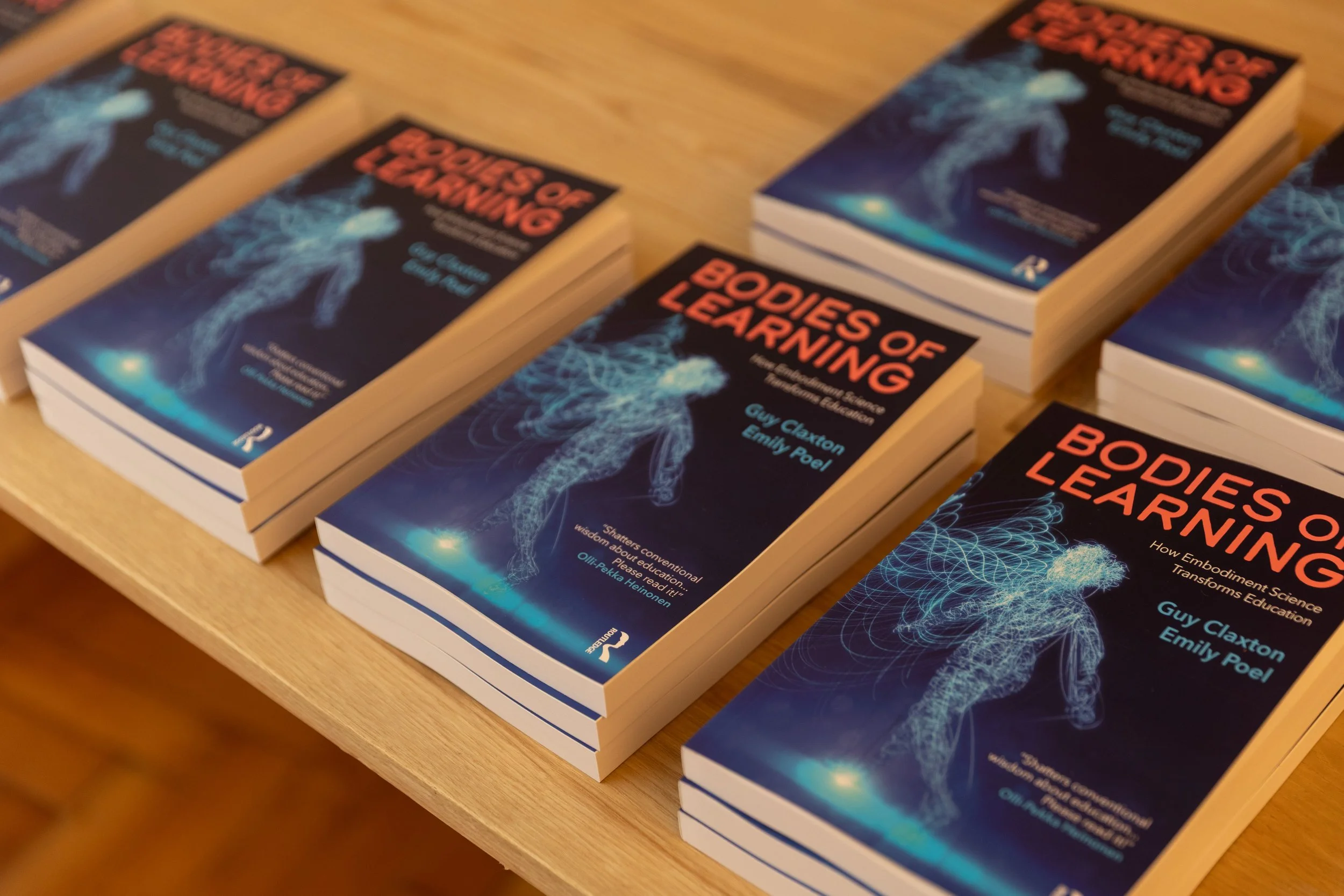
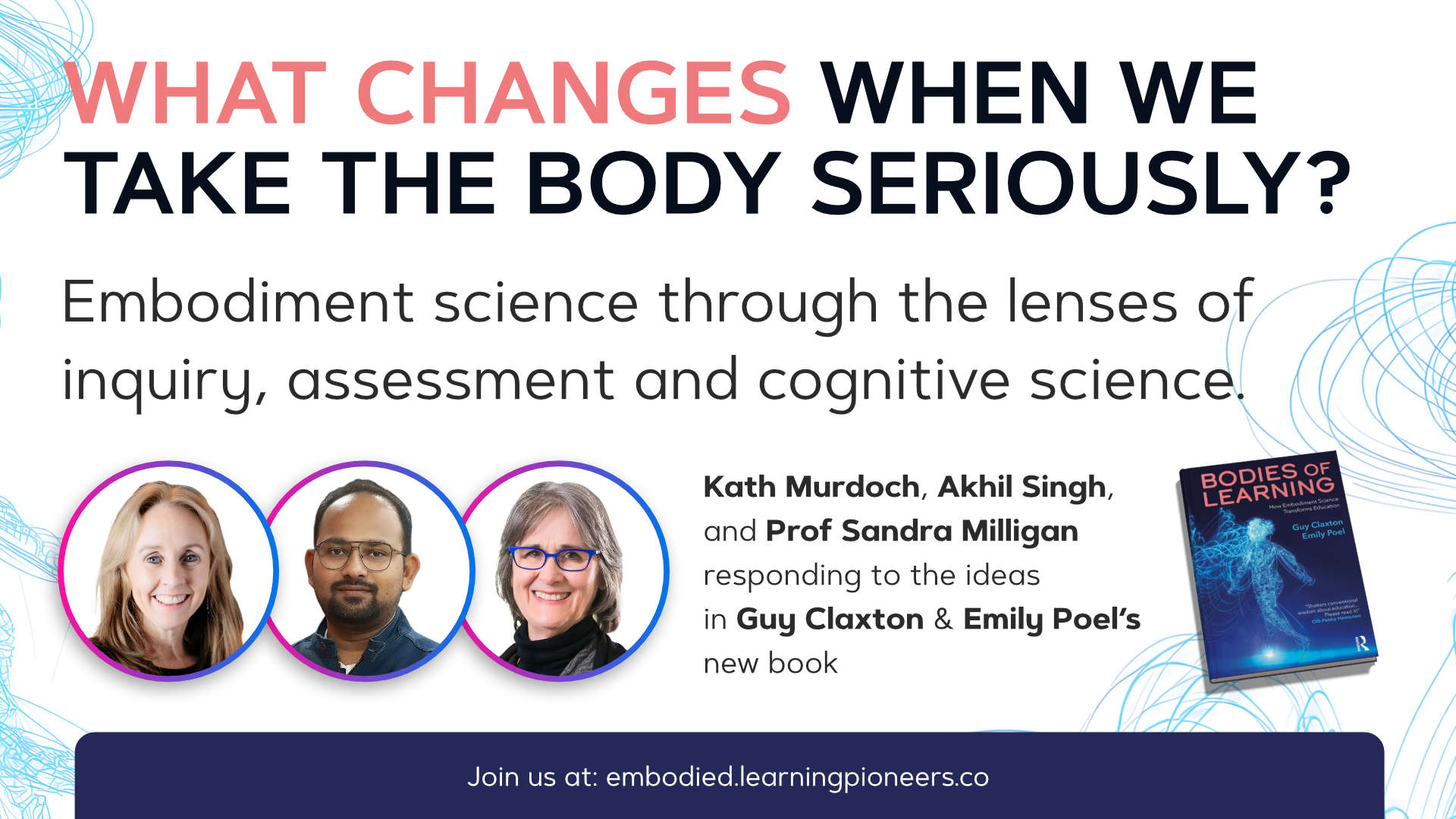
Excitement is mounting for the international online launch of Bodies of Learning: How Embodiment Science Transforms Education by Emily Poel and me. Over 500 people have already signed up, and a distinguished panel has assembled, including inquiry learning guru Kath Murdoch, architect of the world-leading Melbourne Metrics Professor Sandra Milligan, and Indian educator and cognitive scientist Dr Akhil K. Singh. In this blog, I’ll offer some preliminary thoughts about the connections between their work and ours.
On his website, Akhil says, “Learning begins in the body, moves through emotion, and settles in thought.” What an intriguing statement: one that has got me looking forward to reading his book Education for the Embodied Human (Brill, 2024). He says, “This book examines how assumptions about human nature influence educational concepts, formulates a comprehensive, evidence-based theory of human nature, and delves into embodied cognition, backed by the latest empirical findings in cognitive science.”
We could have written that word for word about our book – a kindred spirit indeed. He echoes our starting point that any education system has to be built on a variety of tenets or assumptions: about the future, about children’s lives, about the rights and responsibilities of parents vis-à-vis the state for raising good citizens – and most of all, about human nature. Our book zooms in on five cornerstone concepts: what it means to be intelligent; the nature of learning; the nature of thinking and reasoning; and the nature of knowledge itself. All of these, we agree, appear radically different from conventional understandings when illuminated by embodiment science.
And the idea that learning evolves from bodily experiences and concerns, through emotionally tinted plans of action, to conscious understandings and formulations also parallels work on so-called ‘microgenesis’ that we draw on in our book. Natural learning is propelled by visceral promptings of need and interest. We want to grow competence and comprehension about things that matter – and mattering is signalled by feeling and emotion. Prepare yourselves for exciting conversations!
Sandra Milligan’s work on ‘Melbourne Metrics’ has rapidly achieved international renown. Traditional exams focus on writing (and occasionally talking) ABOUT things because little essays and calculations are more readily ‘markable’ than practical skills or behavioural dispositions, such as perseverance or conviviality. True – so if you value Doing and Being as well as Knowing, methods of assessment have to change.
And that’s what Sandra and her colleagues have been working on. How do you evidence the development of curiosity or reflection – without killing them by sticking a bogus little number on them? Imagine how awful it would be for a child to come home branded with only a ‘3’ for ‘resilience’! It’s a hard nut to crack, but Melbourne Metrics, with the help of AI, is coming up with smart ways of documenting dispositional development without inflicting Death by Measurement.
Meanwhile, Kath Murdoch – also based in the fertile city of Melbourne – is an international pioneer of the equally tricky business of how to do inquiry-based learning well. Like any method of teaching, it can go awry; it can be misjudged or tokenistic. But for flexible teachers who know their kids well, and who can therefore judge what level of challenge they are ready to grapple with, inquiry-based learning is a key form of embodied pedagogy. Kids get to move, talk, and learn how to manage for themselves the inherent emotions of learning, such as disappointment, confusion and frustration.
With a bit of coaching, they learn how to form and take part in productive and harmonious teams, and how to make good use of concrete analogies to kick-start their inquiries. Some teacherly Explanation, judiciously applied, may be necessary, but the time for Exploration is not a waste; it is time well spent, because it is only through that first-hand communal grappling that those learning muscles and thinking skills develop into lifelong learning assets.
We’re looking forward to these stimulating conversations on 22 September, hosted by Becky Carlzon of Learning Pioneers and Tim Logan of Future Learning Design. And for anyone who would like to keep exploring these ideas with us, the conversation will continue through a book study following the launch.
Everyone is warmly welcome to join us.
You can register for free here: https://learningpioneers.co/experience/embodied-book-launch. And if you can’t attend the live event, please still sign up and receive a recording.