4E People: Rethinking What It Means to Learn
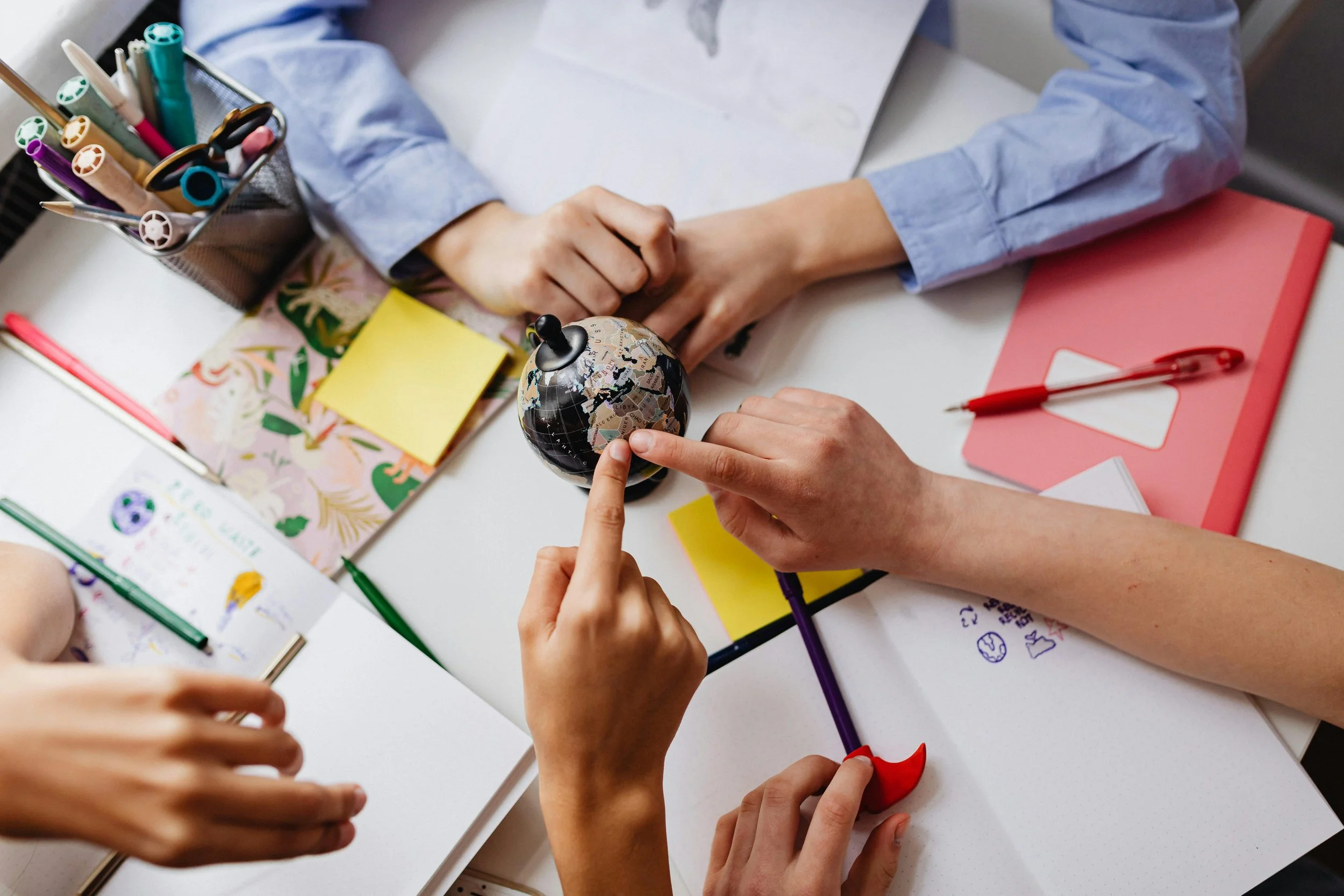
The findings of embodiment science point to a particular view of human nature. Among other things, they suggest that we are fundamentally Enactive, Embodied, Embedded and Extended — hence the idea of 4E Cognition. Taken seriously, this isn’t just an interesting theory. It has sharp implications for how we think about learning, intelligence, and education itself. Learning that is Inactive, Disembodied, Disembedded and Individualised (or ‘Cognitivised’) swims against the tide of human nature. It may be useful sometimes, but it is energetically expensive and should be used sparingly. It’s not the norm, nor the be-all and end-all, of human intelligence.
1) Enaction: We Are Built for Doing
To say that we are enactive is to say that we are designed by evolution for doing things — getting meaningful things done. To the extent that doing sometimes (but not always) needs prior thought and planning, ‘thinking things through’ is a useful strategy. But thinking is a support for doing, not a better way of being. It is an adjunct.
If there is no doing in sight, then thinking can become just playful, or even superfluous. So what price an education whose sense of ‘doing’ is just a stressful succession of tests designed to display what you know at speed, rather than to tackle personally meaningful issues? Relentlessly learning things ‘just in case’ they might one day come in handy is unnatural. Some students get acclimatised to this. Many others never do — and they are often unjustly labelled ‘low ability’ or ‘disaffected’.
2) Embodied: Intelligence Is Not Just in the Head
The second E is Embodied. We are, first and foremost, bodies. Human bodies are complex conglomerations of concerns — things that need doing — and capabilities — things we can do. To survive, these need to be in constant communication so that priorities can be triaged and coordinated action can emerge.
That is why we have brains.
Brains are not like Chief Executives barking orders to the body; they are more like chatrooms where bodily plans and priorities are worked out. They are tuned by experience so that better resolutions can be found over time.
This process does not rely on any higher authority. Intelligence is built into the way the system functions. Thinking is not always necessary or helpful. Sometimes it just keeps us occupied while the body-brain does its thing. Sometimes the body-brain decides what to do far faster or much slower than the tempo of conscious thought.
Traditional schooling rarely makes the time and space for this quieter, often more reliable, form of intelligence to operate. And rarely does it deliberately cultivate a sensibility to these internal processes. Were you taught when and how to use your intuition at school?
3) Embedded: Learning Depends on the Situation
The third E is Embedded. We are always in a situation, and the success of our actions depends on how well we read it. That means being sensitive to the demands, constraints, affordances, resources and risks of the environment — and updating that reading moment by moment.
Intelligence involves sensing and interpreting the external world just as much as the internal one. This has immediate consequences for learning. When students enter a classroom, their bodyminds are already assessing: Is this a safe place to learn? “Safe” here doesn’t mean comfortable or easy. It means that the risks of failing, or looking foolish, are manageable. That no one will mock you for having a go and not (yet) being very good.
As Roger Schank put it: “Learning is about failure, and the recovery from failure.”
Yet traditional classrooms are often insensitive to this dynamic. Without meaning to, they can close the gates to learning before it even begins.
Attending to this is not sentimental. It is straightforward common sense if the goal is to maximise learning.
4) Extended: Intelligence Is Distributed
The fourth E is Extended. Human beings are designed to enhance their intelligence by using the resources around them.
We are natural tool-makers and collaborators. Web browsers, notebooks, tape measures, microscopes — and other people — all extend our capacity to think and act. We are often smarter when we can move things around in space, physically as well as imaginatively.
Thinking and talking themselves evolved as tools for collaboration. It is hard to collaborate without being able to articulate. We share information through texting and gossiping, and hone our understanding through arguing and listening. Oracy is in our genes, but needs cultivation. Did you learn to be a good listener? In class?
Intelligence, then, is not a private possession located in the head. It is a collective, distributed achievement — a response to the needs and opportunities of the moment that draws on all available resources.
For many of us, our smartphones have become part of this extended system. When they fail, it can feel like a cognitive breakdown. And yet, traditional schooling still largely operates on the assumption that intelligence is “all in the head”. Students are taught and tested as if they were tool-less individuals, cut off from the very resources that make real-world thinking possible.
Taken together, these four perspectives point in the same direction:
If we want learning to be effective, inclusive and aligned with human nature, we have to stop designing it as if learners were disembodied brains on sticks — and start taking seriously the full, active, situated and connected reality of what people are and how they learn.
Our new book, Bodies of Learning, is now available to order here.