Embodied Education: The Destination and the Road
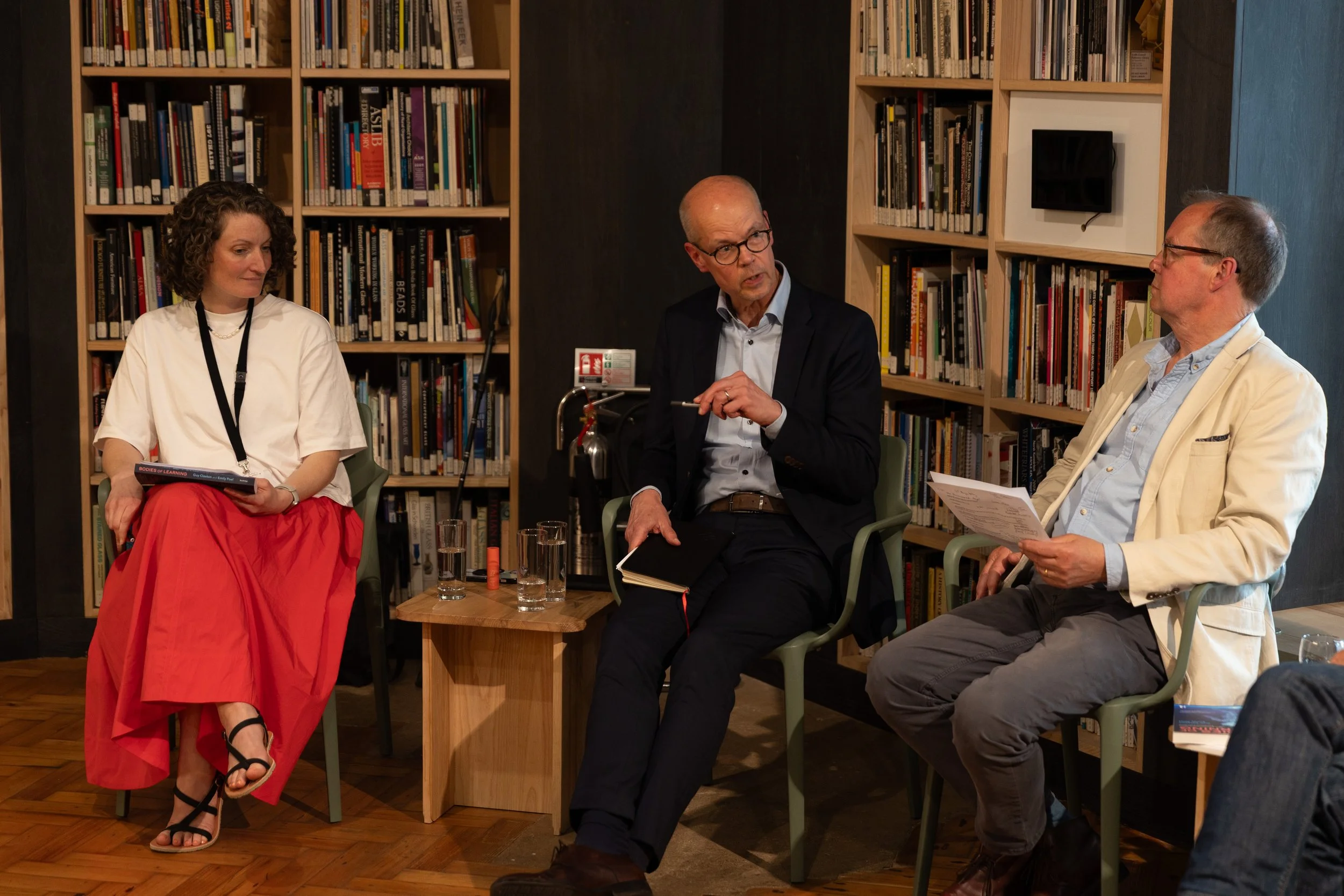
At the in-person launch of our book Bodies of Learning in June, Olli-Pekka Heinonen, Director-General of the International Baccalaureate, said something important:
“The school system is probably the strongest example of an institution where the whole society – parents, students, educators – everyone comes together to solve something. It’s not about “knowing” [or ‘implementing”] something; it’s about us living with the problem together, with others, to create the change [we want to see] … Change comes from the bottom, and it grows… it takes time. Like small mushrooms in the forest, growing.”
He was echoing the words of another wise man, Geoff Mulgan, Professor of Collective Intelligence at UCL, who once wrote: “Most far-reaching ideas and changes usually come from the bottom up, not the top down. Governments [can] play a role in embedding those changes but typically they get involved only at a late stage.”
When changes in education are mandated or imposed, they rarely take root. Only when most everyone involved owns the diagnosis and the cure does deep sustainable change come about. People themselves change. As Mahatma Gandhi probably didn’t say, we have to be willing to become the change that we want to see.
What can change – and how
What does Embodiment Science (ES) have to say about this? We know that it opens up new possibilities about what school could be – new destinations that are worth wanting – because they are shown to be scientifically feasible. Schools could be places that develop young people – all of them, not just some – who bring to real-life problems, large and small, high-quality thinking and powerful learning. At the moment they mostly don’t; but they could.
But what does ES say about the road: the way to get there? The key may be in the word ‘system’. ES sees the world in terms of nested systems. Systems (like bodies, or schools) are composed of mini-systems – ‘parts’ – that are woven together so intricately that the parts become inseparable and the whole behaves in ways that could not be predicted from a mere listing of the ‘parts’. A healthy heart has a slightly irregular beat, because it is listening to and resonating with all the other organs. The way a school is depends on the intricate web of relationships between its constituents. It is continuously resonating internally.
And every system is also shaped by the super-systems in which it is embedded. A child’s body, and its cognition, depends on the quality of the air it breathes and the cultural norms to which its caregivers subscribe. Schools are shaped by the policies of governments, the personalities of inspectors and the beliefs and concerns of parents. School systems are bound to change if shifts in their mini-systems and super-systems align. Changes to a higher-level system resonate down through its sub-systems.
When systems stop listening
Or they do if they have not become sclerotic. Organic systems can become stiffer and their organs stop listening and responding to each other so acutely. This happens as they age, but also in response to acute or chronic stress. They can become functionally disconnected from the wider systems within which they are embedded. They age prematurely. If schools stop listening to their communities, or if parents learn that it is pointless to engage with the school, resonance dies and healthy change and growth get thwarted. If governments fail to see the alarming rise in truancy as a signal to rethink their policies, and they respond only by blaming and punishing, they replace their permeable membranes with rock-solid walls.
Restoring the capacity to respond
So what to do? We can start by deliberately acting to restore the capacity to listen and respond. With some astute effort, schools can become places of shared inquiry, where students, teachers, leaders, parents and policymakers are treated not merely as recipients of change but as participants in discovering what needs to change and how. Small experiments can be tried, noticed, adapted and shared. Teachers can listen more closely to students; leaders to teachers and families; policymakers to the lived realities of schools.
No single person or initiative can redesign the whole system. But each can help it become more permeable, responsive and alive. And when changes at different levels begin to resonate with one another, small shifts can gather momentum. Like Olli-Pekka’s mushrooms, they grow through networks that are largely invisible at first – until, one day, the forest begins to look different.
Shaping the road together
Embodiment science offers us more than a picture of a new destination. It suggests that the road itself must be embodied: relational, experimental, responsive and made by walking it together.
To continue the conversation, join us online on 22 September 2026 for our international Bodies of Learning book launch. We're looking forward to exploring these ideas with educators from around the world. You can register for free here.